Corn feels “healthy,” but glucose still rises
You finish the ear, and everything about it feels like it should have been an “easy” choice—warm, simple, not a dessert. Then an hour or two later, you notice that familiar heavy-tired feeling, or a sudden urge to snack, and it doesn’t quite match what you expected.
That mismatch often comes from how corn is built. Even when it’s boiled, much of what you’re eating is starch, and your body breaks starch down into glucose. If the portion is larger, there’s simply more glucose available to show up in the bloodstream. If you eat it mostly on its own, digestion can move along faster than you’d guess from the word “vegetable,” which can make the rise feel sharper.
What confuses people is that corn can be both “real food” and still raise blood sugar—especially when the serving grows without you noticing.
What drives the spike beneath the surface
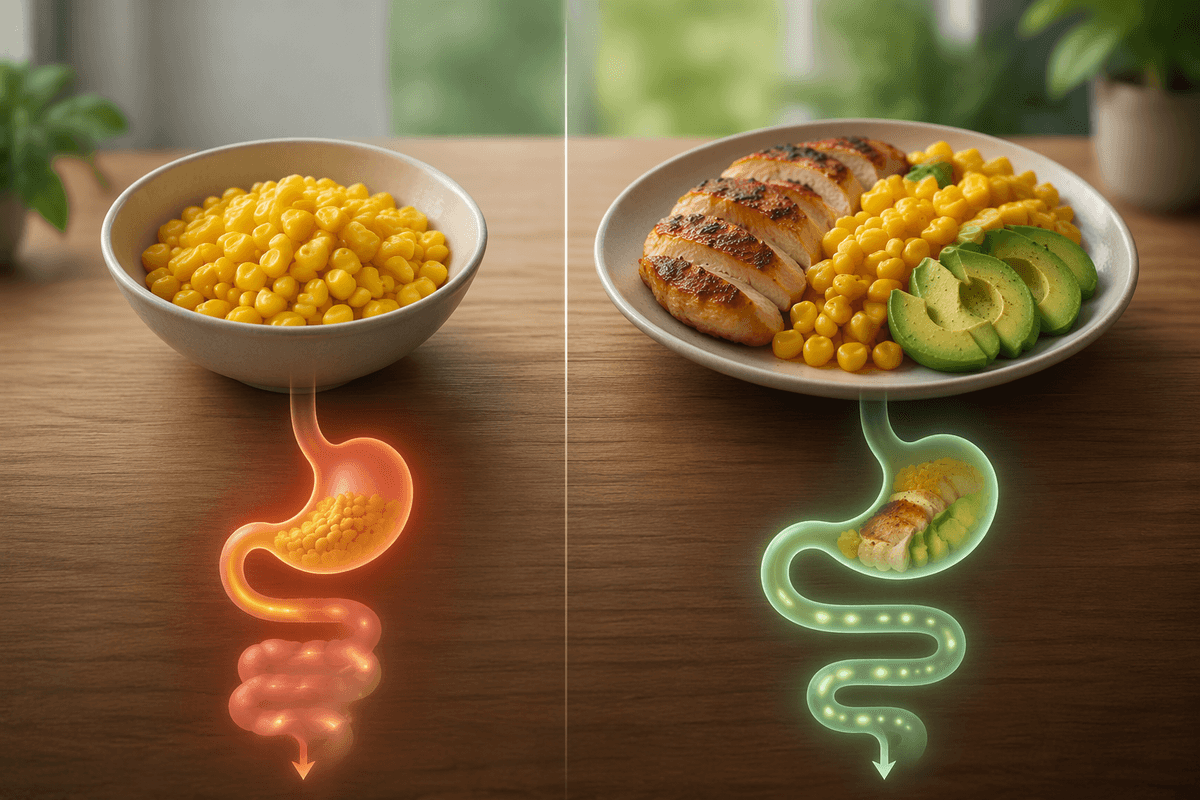
Sometimes it’s the speed that surprises you—your stomach doesn’t feel especially full, yet your energy shifts quickly, like the meal “hit” all at once. Corn can do that because the chewy, whole-food experience doesn’t always match how fast its carbohydrates become usable.
Inside the gut, enzymes begin cutting corn’s starch into smaller sugars, and those sugars move through the intestinal wall into the bloodstream. If there’s a lot of starch in the serving, there’s simply more glucose potential to show up after the meal. At the same time, corn’s fiber helps, but it doesn’t “lock up” all that starch—especially once kernels are well-cooked and easier to break down.
Pairing changes the curve because stomach emptying is not fixed. Protein and fat can slow how quickly carbohydrate leaves the stomach, so the same corn portion may lead to a lower peak spread over a longer window. When corn is eaten mostly alone, that braking effect may be missing, and the rise can feel sharper and harder to predict.
Why boiled corn behaves differently than corn products
The difference often shows up before digestion even starts. One ear of corn asks for real chewing, while corn chips, crackers, or cornflakes seem to collapse almost immediately once they hit saliva. Even though they all come from corn, the body doesn’t necessarily experience them the same way afterward.
With boiled corn, much of the starch remains tucked inside relatively intact kernels. Digestion still happens, but enzymes have to work through more structure first, which usually slows the release of glucose. Grinding corn into flour or meal changes that balance. Suddenly there’s far more exposed surface area, so starch becomes easier to break down and absorb in a shorter window. Two foods may list similar carbohydrates on paper yet land very differently once digestion gets moving.
Puffed cereals, baked snacks, and sweetened corn products soften quickly and tend to move through the mouth and stomach with less resistance, which can make the glucose rise feel sharper or faster. When readings seem inconsistent, the more useful question is often not “Was it corn?” but “What form did the corn take this time?”
Portion reality: translating ears into carb counts
The part that throws people off usually happens at the table, not in the nutrition facts. An ear of corn doesn’t look or feel like a “measured” portion the way a scoop of rice or a slice of bread does. One cob may be short and slim, another oversized and packed with dense kernels, yet both still register mentally as the same simple vegetable side.
What changes, though, is the actual amount of starch and sugar packed into those kernels. A medium ear commonly falls somewhere around 20–30 grams of carbohydrate, but that estimate widens quickly with larger cobs or second helpings. The same thing happens when kernels disappear into soups, salads, or grain bowls, where volume becomes harder to judge by eye and portions quietly drift upward.
That’s why the glucose response can seem unpredictable even when the routine feels identical. “One ear of corn” sounds consistent, but the carbohydrate load may not be. A bigger cob, a more generous serving spoon, or an unnoticed extra half-cup can shift the math enough to change the after-meal rise more than the cooking method itself.
Balanced plate math that flattens the curve
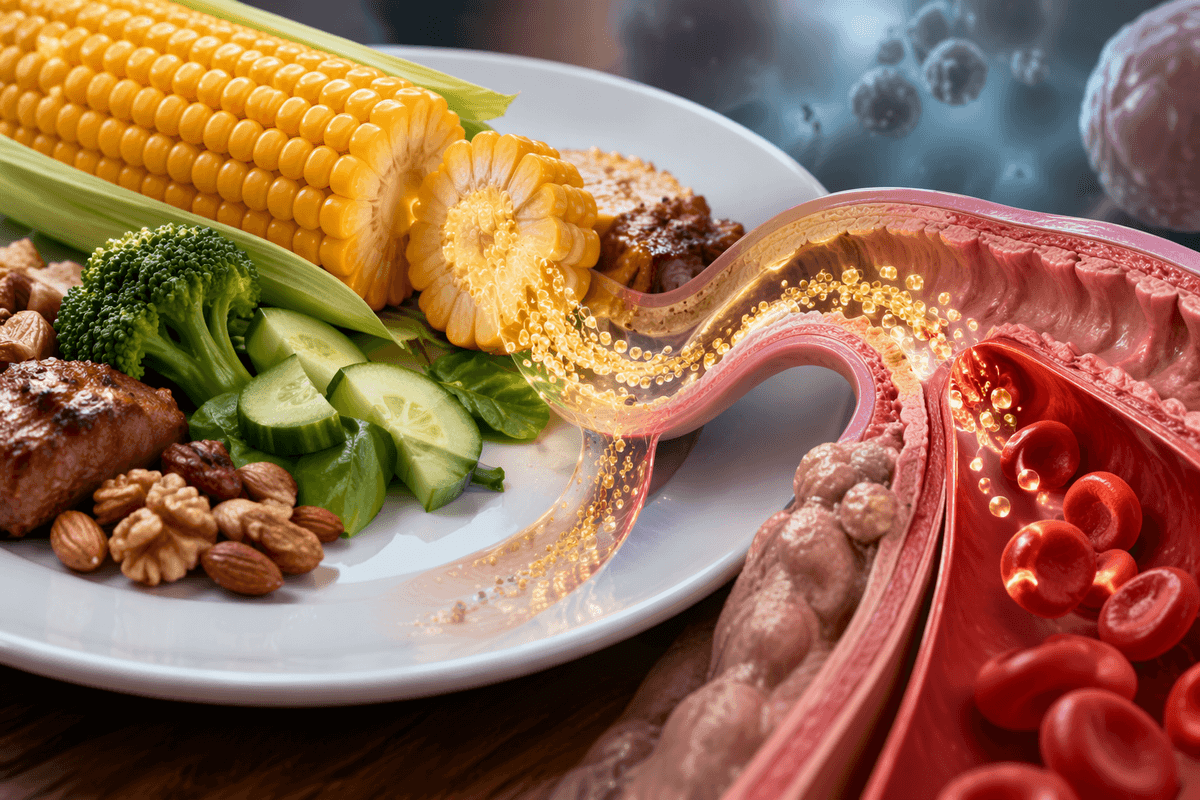
It can feel oddly unfair when corn is sitting next to chicken and salad, yet your reading still climbs more than you expected. The “math” is that corn is doing two jobs at once—acting like a vegetable on the plate, but acting like a starch in the bloodstream—and your eyes don’t always count it that way.
When corn is the main carbohydrate, the rest of the plate can change how quickly that carbohydrate shows up. Protein and fat tend to slow stomach emptying, so glucose may enter the bloodstream in a steadier stream rather than a rush. Nonstarchy vegetables add volume and fiber without much glucose load, which can make the meal feel more filling even if the corn portion is smaller.
If the meal is lower in protein than you think (a small piece of fish, lean meat without much added fat), or the corn portion creeps up, the “brakes” may be weaker and the peak can still be higher. In some cases, that’s why corn eaten as the star side feels very different from corn tucked into a plate that has a clear protein anchor and a lot of crunchy, watery vegetables.
When a sensible swap backfires unexpectedly
It often happens on a night you’re trying to be “good”: you skip the rice or the roll, add an ear of corn, and still end up with that wired-then-draggy feeling later. The swap looked sensible, so the result can feel discouraging.
One reason is that swaps can change more than the carb source—they can change the brakes. If corn replaces a starch that was usually eaten with more fat or protein (butter on a potato, peanut butter with toast), the meal may empty from the stomach faster than you expect. And because corn reads as a vegetable in your head, it’s easy to take a larger portion without noticing, which raises the glucose “dose” even if the plate looks balanced.
Another surprise is stacking: corn plus beans, fruit, or a sweet sauce can quietly turn into a higher-carb meal than the original. If the pattern repeats, it may be worth treating corn as the starch, not the bonus.
Personalizing corn: timing, activity, and monitoring
Some days the same ear seems to “sit fine,” and other days you notice a faster heartbeat or a foggy, snacky feeling before you’ve even cleaned up. That inconsistency isn’t always the corn changing—it may be your baseline changing.
Timing matters because insulin sensitivity can shift over the day. In some people, a corn side at breakfast lands on top of a naturally higher morning glucose, while the same portion later may look calmer. Recent sleep, stress, and a higher starting number can all make the rise feel steeper, even when the plate looks identical.
Activity can also redraw the curve. Working muscles pull in glucose more readily, so a meal followed by normal movement may peak lower than a meal followed by sitting. If you use a meter or CGM, watching the pattern (not just one number) can help you see whether corn is acting like a modest starch or a bigger one for you. If the spikes keep surprising you, it may be worth bringing a few logged meals to your next visit.