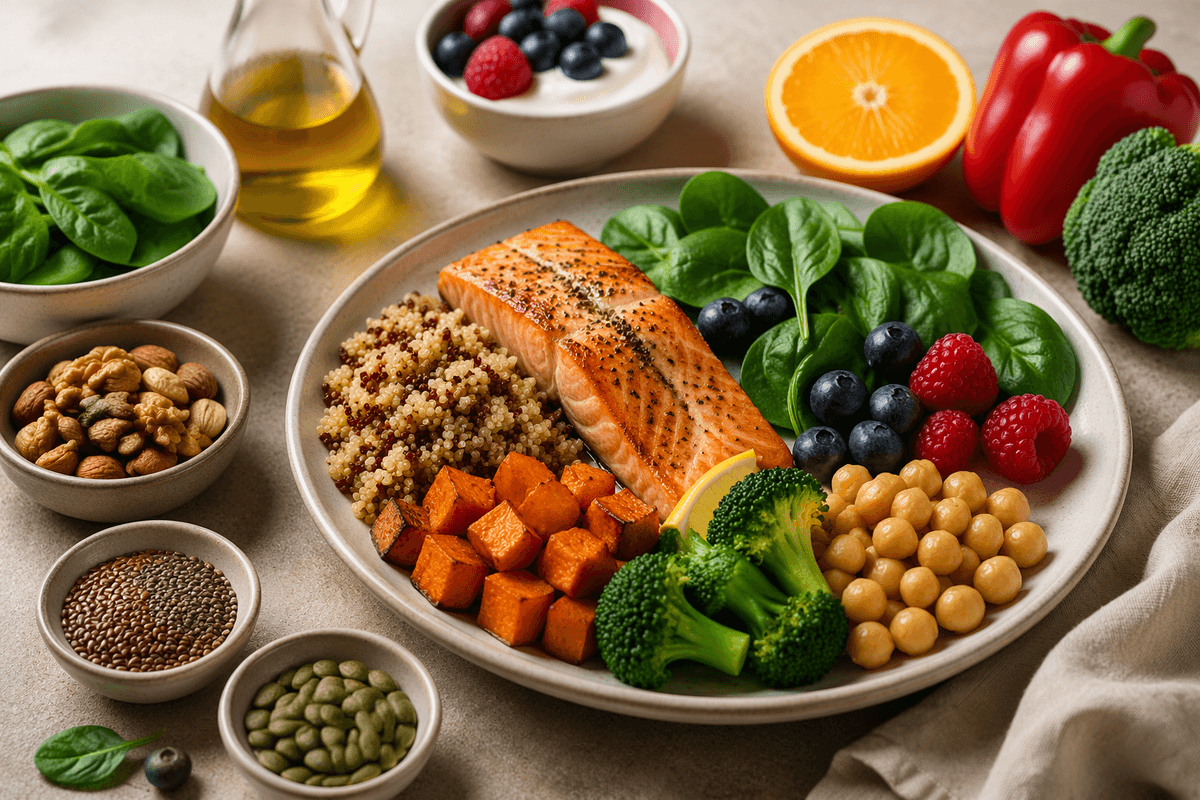
The common expectation: fat loss equals constant restriction
By midafternoon, it can feel like your day is already “blown” because you ate a little more than planned at lunch. That’s where the common idea shows up: fat loss must mean being a little hungry all the time, saying no all the time, and never letting up.
Part of that expectation comes from how the scale behaves. A salty dinner, a later bedtime, or a harder workout can push water weight up overnight, even when actual body fat hasn’t changed. When the number bounces, people often respond with tighter rules, which can add discomfort and make evenings feel like a constant negotiation.
Restriction can also sharpen hunger and cravings, especially when you’re busy and sitting most of the day. The brain starts treating food as a “scarce resource,” making snack thoughts louder and willpower feel less reliable. If this pattern keeps repeating, it may be worth watching your weekly trends instead of one day’s tightness.
Why small calorie gaps beat dramatic deficits
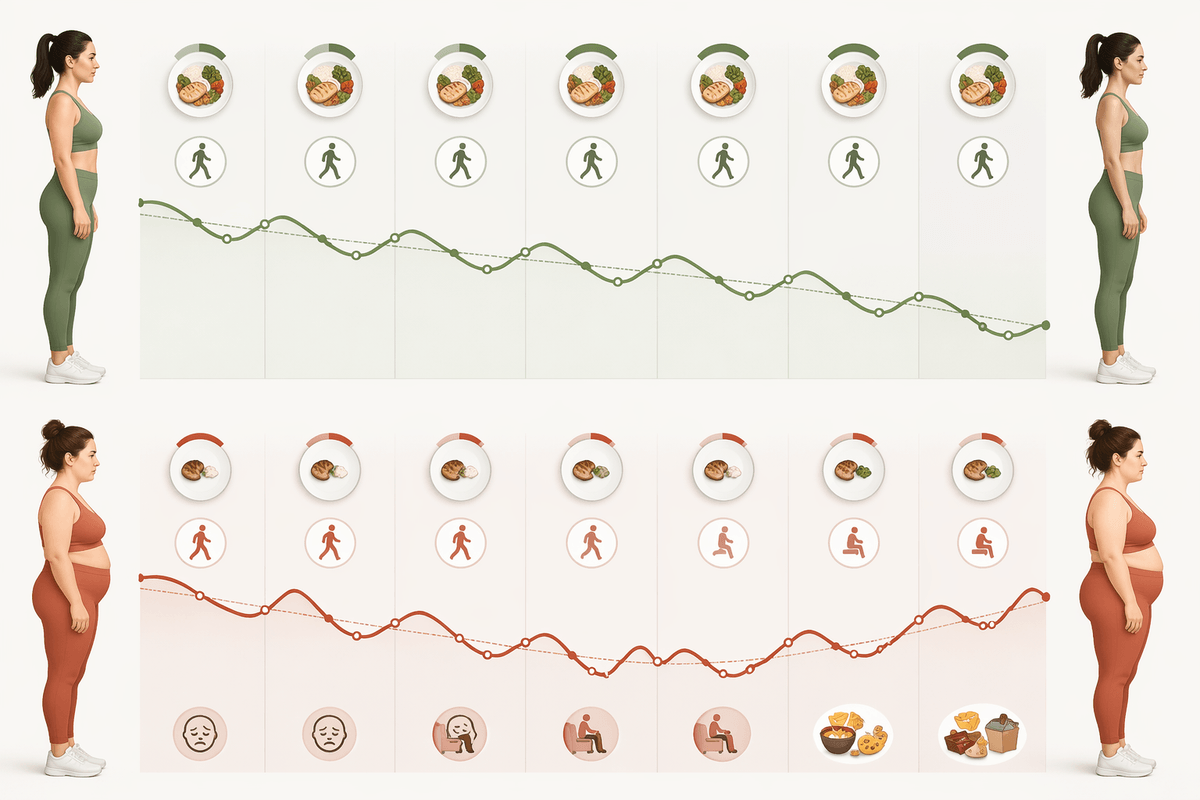
Somewhere around day three of a “fresh start,” the tiredness shows up first. You’re doing the same meetings and errands, but everything feels slightly heavier, and by late afternoon your brain starts scanning for something quick—usually the exact foods you told yourself you’d avoid.
That’s one reason small calorie gaps can work better than dramatic cuts: when the deficit is too large, the body often responds by quietly dialing down non-exercise movement. You may sit a little longer, take fewer incidental steps, and feel less fidgety without noticing. At the same time, hunger signals can get louder, and decision-making gets more impulsive when you’re depleted, which makes evening snacking more likely.
A smaller gap tends to create less internal pushback. Progress can feel inconsistent on the scale because water and glycogen still shift with sleep, salt, and workouts, but over weeks, a modest, repeatable deficit is more likely to hold on imperfect days—without turning every meal into a test.
Protein and fiber change appetite before willpower
It’s often at 4 p.m. that hunger suddenly feels urgent, even if lunch wasn’t that long ago. In that moment, people tend to blame “weak willpower,” but the setup was usually earlier: a meal that digested fast and didn’t give the stomach much stretch or the brain much “we’re covered” feedback.
Protein and fiber tend to slow the pace of eating and digestion in a way that can change how strong cravings feel later. Protein is linked with higher satiety signaling, and fiber adds bulk and water-holding volume, which can make the stomach feel more physically full. When those are low, it can feel like you’re snacking “out of nowhere,” but it’s often a delayed response to a meal that was mostly quick carbs and added fat.
On better-slept days, that same lunch might feel fine, while on short-sleep days it suddenly doesn’t. That mismatch is why appetite can look like a character flaw when it’s really a shifting set of signals.
Walking and strength training influence fat loss differently
The day after you finally get a “good” workout in, your legs may feel heavy and the scale may oddly read higher. That mismatch can be frustrating, especially if you expected every hard session to show up as an immediate drop.
Lower-intensity movement tends to work through volume and consistency: more steps raise daily energy use without demanding much recovery, and it can keep you from slipping into long, still stretches that quietly reduce your burn. For people who sit most of the day, that steady movement can change the whole day’s math more than a single intense effort.
Strength training often influences fat loss less by the calories burned during the session and more by what it protects. Keeping muscle can support higher day-to-day energy needs, but lifting can also refill glycogen and bring temporary water retention from muscle repair, which makes progress look inconsistent. If the scale bumps after new lifts, it may be worth treating it as noise before changing the plan.
Sleep debt quietly pushes choices toward higher calories

The next morning after a short night, it’s common to feel “snacky” before you’re truly hungry. Coffee can prop you up for a while, but by late afternoon the urge for something salty or sweet often feels louder, even if your usual meals haven’t changed.
Sleep debt can tilt the appetite system toward more intake. In some cases, the brain reads fatigue as a need for quick energy, so foods that are dense and easy to eat start looking more rewarding. At the same time, tiredness can dull the signal that you’ve had “enough,” so portions drift up without feeling like a deliberate choice.
It also tends to shrink the gap between intention and action. When attention is thin and patience is low, small frictions—packing food, stopping at the store, cooking—feel like extra effort, and convenience wins. If this keeps happening across a workweek, the scale may bounce for reasons that don’t match how hard you felt you tried.
A reasonable ‘eat cleaner’ plan can backfire socially
It can start with a small pause at a restaurant: you scan the menu for the “clean” option, then realize everyone else already ordered. Suddenly food isn’t just food—it’s a social moment, and your plan turns into a visible decision that you have to explain or defend.
What looks reasonable on paper can get inconsistent in real life because “eating cleaner” often adds rules that don’t travel well. Work lunches, family dinners, and celebrations tend to center on shared foods, and when your choices separate you from the group, it may feel easier to skip, nibble, or “save calories” and deal with hunger later.
The friction of standing out can create a quiet stress loop—more self-monitoring, more mental effort, and then a stronger rebound pull toward whatever feels normal and easy once you’re home. In some cases, the extra calories show up less as a single “cheat” and more as evening grazing that doesn’t feel connected to the original plan.
Revised understanding: habits that survive imperfect weeks
By the time Friday hits, the plan often isn’t “broken” so much as frayed. You might notice you’re still eating your normal meals, but the edges of the day—commutes, kid activities, late emails—are where extra bites slip in, and the scale’s bounce makes it hard to tell what mattered.
What tends to hold up in imperfect weeks are habits that reduce the need for constant decision-making. When meals reliably include enough protein and fiber, appetite often calms down earlier in the day, so evenings don’t feel like a catch-up period. When sleep is short, those same habits can feel less effective, which is why some weeks look “worse” without being a true stall in fat loss.
The shift is learning to read patterns instead of single outcomes. A few higher-salt meals, a new lifting session, or a stressful week can push water and glycogen up, masking changes in body fat. If the scale is noisy but your routines stayed mostly intact, it may be a sign to wait for the weekly trend before rewriting the rules.