Why platelets track with overall diet quality
You might notice it after a week where meals felt scattered—more takeout, fewer real sit-down plates—and then the next lab report lands a little “off,” even if nothing else seems different. It can be tempting to blame one food or a single supplement, but platelet changes usually don’t behave that neatly.
Platelets are made in the bone marrow, and that process draws on the same basics that support overall blood health: enough protein, key vitamins and minerals, and steady energy intake. When diet quality dips, it’s often not one missing “magic” nutrient—it’s a cluster of small shortages adding up, plus the body’s stress response shifting how long platelets last in circulation.
Inflammation, and frequent ultra-processed meals can also muddy the picture, because they may affect platelet survival and reactivity even when counts only move slightly. If numbers fluctuate, it may help to think in patterns over weeks, not single meals.
What drives platelet production beneath the surface
When bruises seem to show up from a light bump, it’s easy to assume your body “ran out” of platelets overnight. The frustrating part is that production doesn’t react that fast, so the timing can feel inconsistent with what you ate yesterday—or even last week.
Platelets start as large marrow cells called megakaryocytes, which bud off thousands of platelets into the bloodstream. That assembly line responds to signals like thrombopoietin (a hormone made mostly in the liver), and it can slow down when the body is short on building materials or when inflammation shifts priorities toward other immune demands. Drinking can also interfere here in some people, not always in a way that matches how “healthy” the rest of the week looked.
Even when marrow output is steady, platelet counts can drift if platelets are being used up faster, broken down sooner, or acting more “sticky” than usual—so a small lab change doesn’t always mean one clear cause.
Protein and minerals as marrow building materials
It can feel like you’re “eating fine,” yet your meals still leave you oddly unsatisfied—then you start scanning your arms for new marks and wondering what you missed. That disconnect often shows up when intake is a bit inconsistent: enough calories some days, not enough on others, or plenty of snack foods but not much that actually supports blood-building tissue.
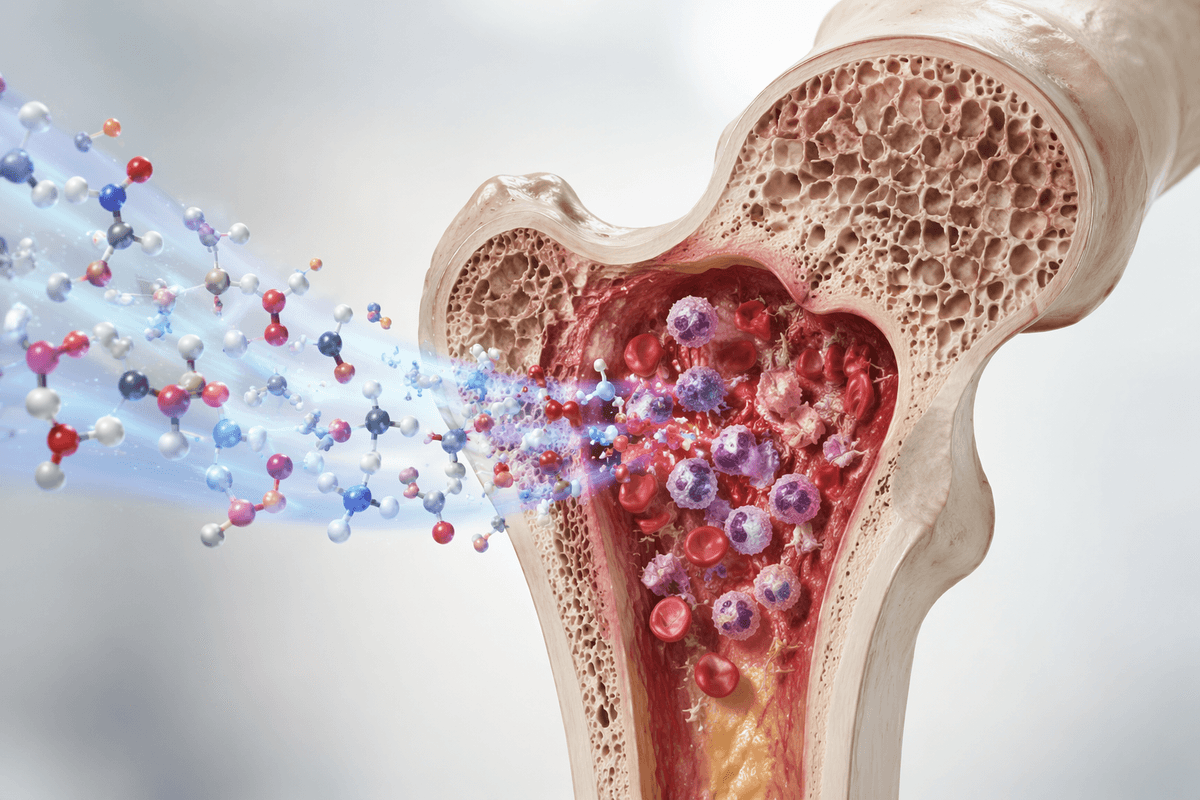
Bone marrow is constantly making new cells, and that work depends on a steady supply of amino acids from protein. If protein intake runs low for long enough, the body may have less flexibility to keep that production line moving at its usual pace—especially if you’re also healing, training hard, or fighting off an illness. The tricky part is that the impact can lag, so it may not match the day your eating felt “off.”
Zinc, copper, and selenium are involved in enzymes that help cells divide and mature, and shortfalls can be subtle—more like a slow-down than a clear crash. Because those gaps don’t always cause obvious symptoms, it’s easy to misread a small platelet dip as random when it may reflect weeks of uneven building materials.
Iron, B12, and folate as frequent bottlenecks
Sometimes it shows up as a familiar kind of tired—then you look at your labs and realize the “blood” numbers don’t all move together. That’s where iron, vitamin B12, and folate often get misread. People may focus on platelets alone, but these nutrients can be limiting factors for the marrow overall, so a platelet change can feel disconnected from what you think you’ve been eating.
In some cases, the bottleneck isn’t calorie intake—it’s whether the marrow can run cell-division steps smoothly. Folate and B12 are used to build DNA in fast-turnover tissues like bone marrow, so when either runs low, blood cell production may slow or become less efficient over time. Iron adds a different constraint: it’s central to hemoglobin, and when iron stores are low, the body may redirect resources toward oxygen-carrying capacity in ways that don’t show up as a simple, predictable platelet pattern.
Absorption issues, heavy menstrual bleeding, long-term acid reducers, low animal-food intake, or drinking can all shift iron, B12, or folate status—so “I ate spinach this week” may not match what your marrow can actually use yet.
Antioxidant-rich produce shapes platelet reactivity indirectly
Sometimes the count on your report barely budges, yet you still feel like you bruise more easily—or a small cut seems to ooze longer than you expect. That mismatch can be confusing, because platelet “behavior” can shift even when the number itself looks stable.
Colorful fruits and vegetables tend to work in the background by shaping the chemical environment platelets circulate in. When oxidative stress and low-grade inflammation run higher, platelets may be more likely to activate and clump, because reactive molecules can nudge signaling pathways toward stickiness. Produce rich in antioxidants (like berries, citrus, leafy greens, and peppers) may help buffer some of that, indirectly calming reactivity rather than “raising” a count overnight.
A week of better salads doesn’t always translate to an immediate, predictable lab change, and a normal platelet count doesn’t guarantee platelet function feels normal. That’s why people can misread bruising as strictly a platelet-number problem, when it may be more about the conditions platelets are operating under.
Omega-3 fats: balance benefits, unexpected bruising
Then there’s the moment you realize the bruises started after a “good” change—more salmon, more chia, maybe a fish-oil capsule—yet your platelet count doesn’t look dramatically different. That mismatch can make it feel like the lab is missing something.
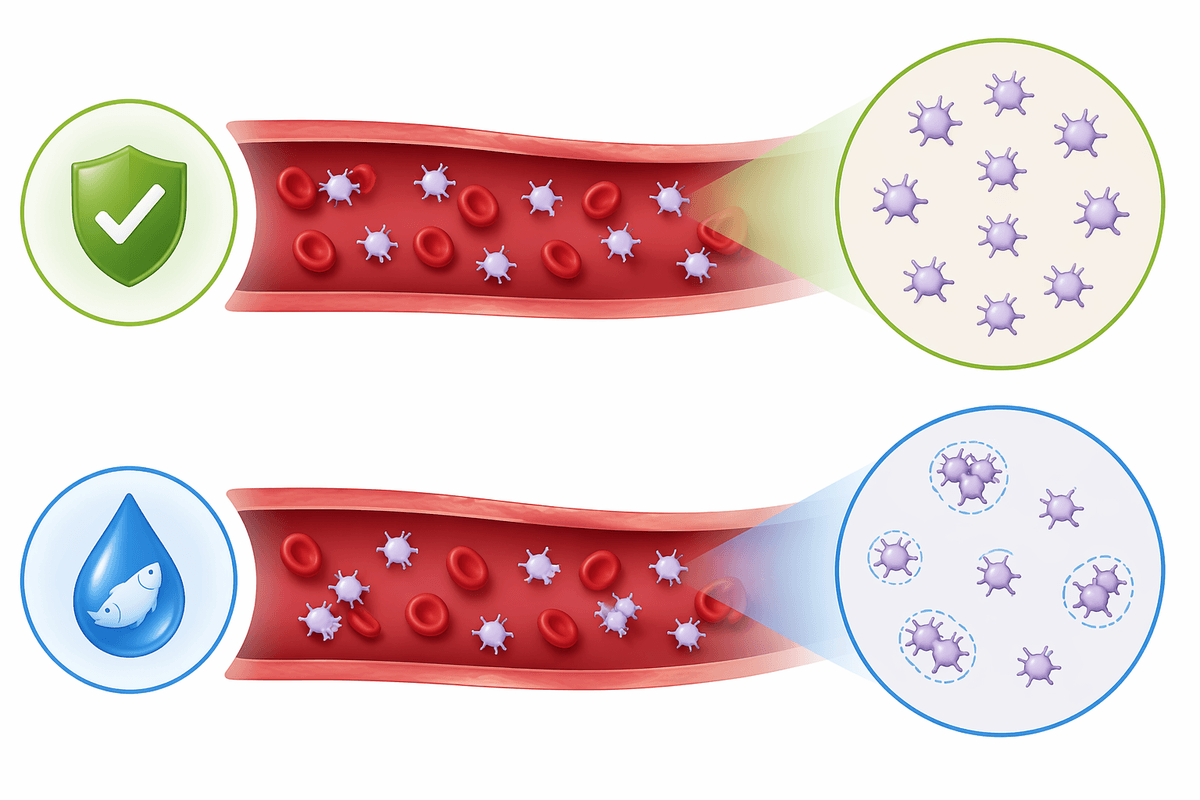
Omega-3 fats don’t usually push platelet production up or down much. Instead, they can shift how platelets behave in circulation. In some people, higher omega-3 intake makes platelets less eager to clump by changing their membrane fats and the signaling chemicals they release, which can translate into easier bruising even with a normal count.
The uncertainty gets bigger when omega-3 supplements stack with aspirin, NSAIDs, or prescription blood thinners, because the combined effect can feel disproportionate to the dose. If bruising keeps escalating or nosebleeds show up, it may be worth treating that as a timing clue rather than “just sensitive skin.”
Vitamin K foods can create medication confusion
It can be unsettling when you’re eating “healthier” and still notice new bruises—especially after adding more salads or green smoothies. A common misconception is that these foods “thin” your blood the way fish oil can, when the bigger issue is often how they interact with certain medications.
Vitamin K helps the liver activate clotting proteins, so it can influence clotting balance without necessarily changing your platelet count. For people taking warfarin (Coumadin), swings in vitamin K intake—lots of spinach one week, very little the next—can make INR results bounce, which may feel like your body is being unpredictable. The confusing part is that bruising or bleeding can show up even when platelets are normal, because the clotting system and platelets work together.
This doesn’t mean vitamin K–rich foods are “bad,” but the inconsistency is what tends to cause trouble. If you’re on a blood thinner or have been told your clotting tests are unstable, it’s worth treating sudden diet shifts as a possible piece of the puzzle rather than assuming your platelets alone are the problem.
A balanced plate pattern that supports steady counts
It’s often the in-between meals that tell the story: a “healthy” lunch, then a light dinner, then coffee the next morning and you realize you’re trying to connect a bruise to one ingredient. That’s where a steadier plate pattern can help—not as a quick fix, but as a way to remove the day-to-day swings that quietly change what your marrow has available.
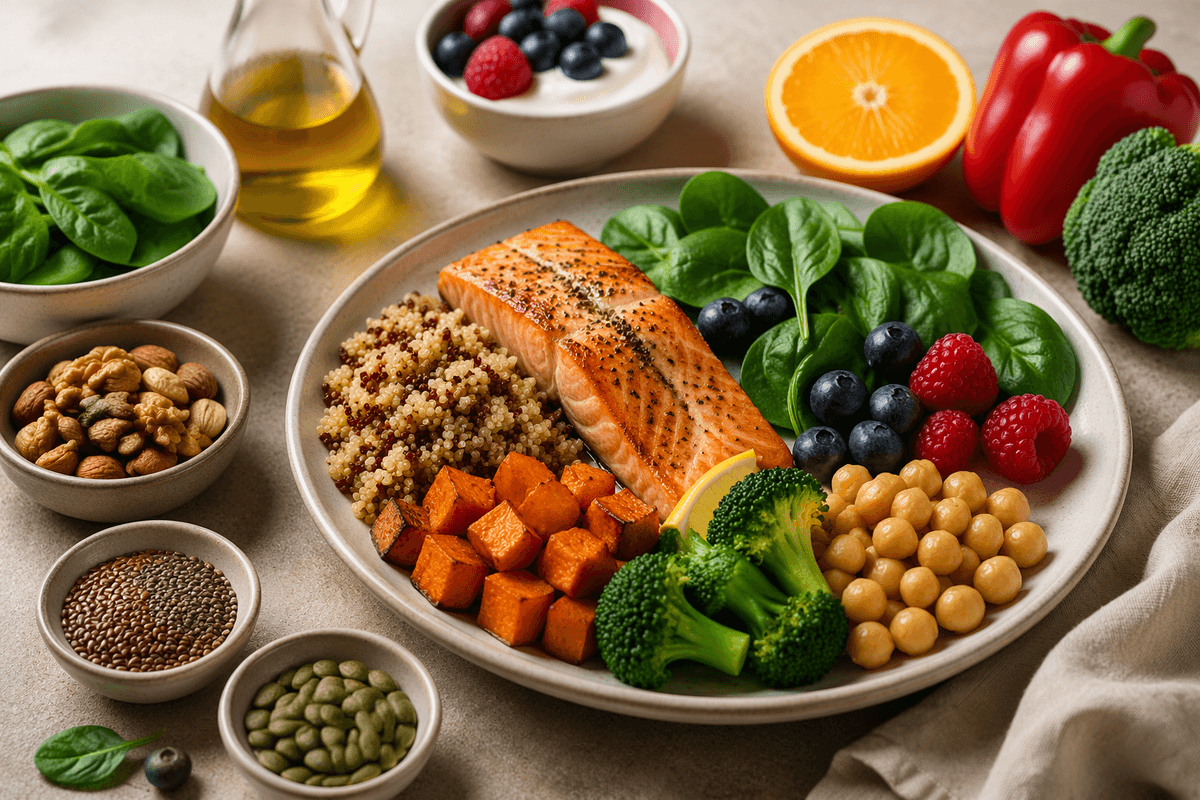
A balanced plate tends to look boring on purpose: a solid protein at most meals (eggs, poultry, tofu, beans, yogurt), a source of iron or iron-pairing foods, and regular folate- and B12-containing options depending on your diet. The underlying reason this matters is timing—marrow cells divide on a schedule, and when protein, B12/folate, or iron are inconsistent, production can slow in a way that shows up weeks later and feels disconnected from what you “just started eating.”
What complicates it is that bruising doesn’t always track with counts. Even with a stable number, high-dose fish oil, NSAIDs, or warfarin timing can shift clotting balance enough to make your skin feel like the messenger. If that pattern keeps intensifying, it’s usually a cue to take the trend seriously, even before the next lab draw.