Why ride near Rome (and what beginners fear)
I almost talked myself out of riding near Rome for a boring reason: I didn’t want a “tourist pony” experience, and I didn’t want to spend my one free day stressing over trains, WhatsApp messages in Italian, and whether the helmet would actually fit. That hesitation is common—and it’s also why riding near Rome can work so well for beginners if you treat it like a logistics decision, not a romantic impulse.
The big appeal is efficiency: you can be on a horse within 60–90 minutes of leaving the city, often with pickup or a simple train + taxi connection, and rides usually run 1–2 hours (roughly €60–€120 per person, before transport). The constraint is that “near Rome” can mean suburban trails and arenas—fine for first-timers who want calm horses and instruction, less great if you’re picturing cinematic countryside the whole time.
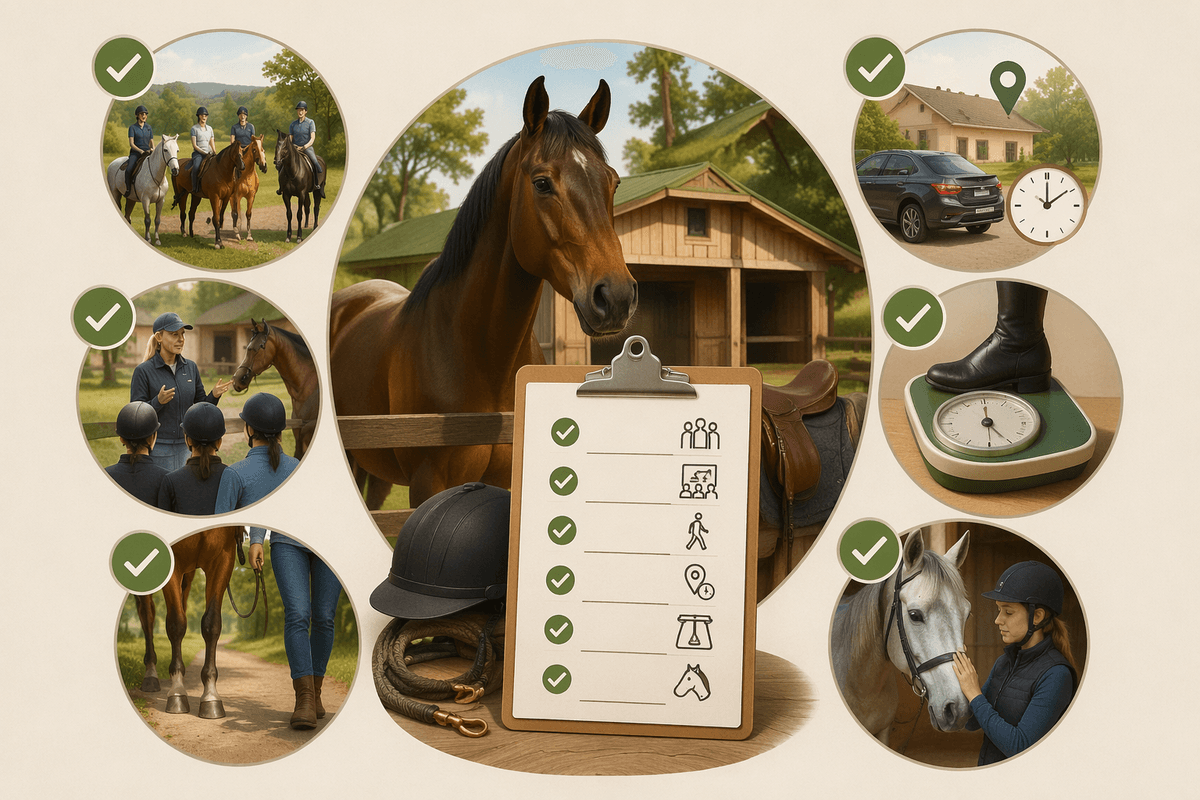
Beginner fears tend to cluster: falling, not understanding instructions, and being pressured into trotting. Reputable stables reduce all three, but only if you ask directly: max group size, whether you’ll stay at a walk, what’s included (helmet, guide, insurance), and the exact meeting point. If a listing is vague on those details, it’s usually vague on safety, too.
Choosing the right stable and horse
The first friction point is realizing that “Rome pickup” can mean two very different things: a van that actually collects you from a central spot (low stress, higher price), or a vague “near Rome” meeting point that quietly assumes you’ll solve the last 10–20 km yourself. If you’re trying to keep this beginner-friendly and car-free, I’d treat pickup clarity as a screening tool: if they can’t tell you the exact address, start time, and how late you can be before you’re marked a no-show, they’re not set up for first-timers.
When you compare stables, prioritize operations that sound a bit boring on paper: small groups (ideally 4–6), a pre-ride briefing, and an explicit “walk-only available” option. You’ll sometimes pay slightly more for that structure, but it usually buys you calmer pacing and more attention—especially if you’re solo and don’t want to get absorbed into a confident group. Ask whether the guide rides alongside you (better on trails) or leads from the ground (fine in arenas, less reassuring outside).
Horse choice matters more than breed or size: you want the stable to match you to a “schoolmaster” type—steady, used to beginners, and not reactive to city noise. The useful questions are specific: How do you assign horses? What’s the rider weight limit (and is it strict)? Can I request a slower horse and stay at a walk the entire time? If the answers feel defensive—or they promise a “gallop for everyone”—it’s an easy skip.
Best beginner-friendly day trips from Rome
The moment you switch from “near Rome” to a true day trip is when the commute starts competing with the saddle time. If you only have one free day, the most forgiving option is to ride on the city’s edge—think Appia Antica-style countryside on Rome’s doorstep—because you can usually combine a metro + short taxi and still be back for dinner. It’s not the postcard-perfect Tuscan panorama, but it’s efficient and beginner-proof: shorter transfers mean you’re less likely to arrive flustered, late, or dehydrated (all of which make a first ride feel harder than it is).
If you want scenery that feels distinctly “out of Rome” without renting a car, aim for places that work cleanly by train: the Castelli Romani area (Frascati/Albano zone) for gentle hills and vineyards, or the Bracciano area for lake views and a quieter pace. The catch is the “last mile”: even when the train part is easy, you’ll often need a taxi for the final 10–20 minutes, and that’s where timing and costs can wobble (limited cars, Sunday schedules, drivers who don’t love short rides). For beginners, I’d rather pay for a stable that coordinates the pickup from a specific station than gamble on finding transport on arrival.
For a lower-commitment alternative, the coast near Ostia can be a good reset—flat terrain, open air, and a shorter rail ride—though beach riding is frequently seasonal and wind can make a calm horse feel more “awake.” When you inquire, ask three things in one message: exact meeting point (Google Maps pin), whether the ride is walk-only by request, and what happens if trains run late (grace period vs forfeiting). The best beginner day trips aren’t the fanciest; they’re the ones where the logistics are boringly clear.
What your first ride will feel like
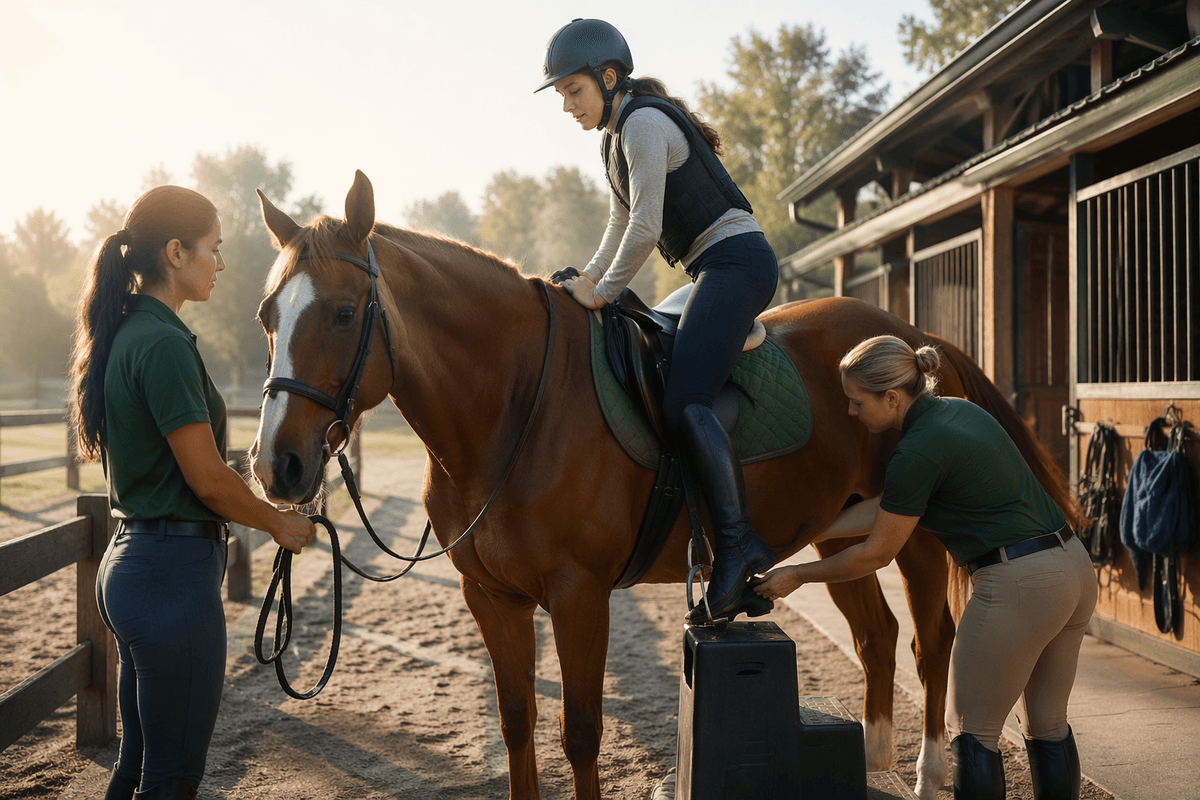
The first two minutes in the saddle are usually the most mentally noisy: you’re suddenly higher than you expect, your legs feel like they’re not doing anything useful, and you’re trying to decode whether a horse shifting weight means “problem” or just “standing.” What works well is a stable that treats mounting like part of the lesson—someone holds the horse, adjusts your stirrups twice, and checks you can stop and turn before you leave. If they rush you straight onto a trail because “it’s easy,” that’s when beginners start gripping, bouncing, and feeling out of control even at a walk.
At a walk, the motion is more side-to-side than people imagine, and it can feel oddly tiring in your hips and inner thighs after 20–30 minutes. If you’re fit enough to walk around Rome all day, you’re fit enough for a beginner ride—but “Rome fit” doesn’t automatically translate to “saddle fit,” especially for couples where one person is more nervous. Expect simple cues (heels down, hands low, look up), and don’t be surprised if the most challenging part is staying relaxed, not being brave. Language usually isn’t a big barrier if the guide demonstrates, but it becomes one when groups are large and instructions get shouted back over a line of horses.
The pace question is where trips can quietly go wrong: mixed groups often include someone who wants a trot “just to try,” and the whole ride speeds up. If you want a low-stress first time, ask in advance whether you can remain walk-only even if others trot, and whether the guide can split the group (or keep you in front, where it’s calmer). You’ll trade a little “adventure” for a ride that feels controlled—and you’ll get off the horse feeling pleasantly worked, not like you survived something.
Making the call: which ride fits your trip
I ended up treating the choice like a three-variable equation—time, scenery, and how much uncertainty I was willing to tolerate—and that made the “right” ride obvious. If you’ve only got a single free day and you want the lowest-friction win, book the closest, city-edge option: metro + short taxi (or a true central pickup), 1–2 hours in the saddle, and typically €60–€120 per person plus transport. The setting can be more “green belt” than “movie countryside,” but the reliability is the point when you’re new.
If you’re chasing a stronger day-trip feeling, choose a train-friendly area (Castelli Romani or Bracciano) only if the stable will coordinate a station pickup at a fixed time—otherwise the last 10–20 km can eat your margin with taxi scarcity and weekend schedules. Budget closer to half a day door-to-door for a similar 1–2 hour ride, and accept that you’re paying partly for logistics, not extra riding.
Before you pay, send one message with four checks: walk-only guaranteed (even if others trot), max group size, exact meeting point (Maps pin) + late policy, and what’s included (helmet/insurance). If they dodge those, pick the boringly clear operator—you’ll enjoy the ride more than the drama.