You need a bank account after credit fell apart
It usually shows up in a plain moment: payroll switches to direct deposit, the landlord wants an online payment, the utility company stops taking cash. After credit falls apart, the cash-based workarounds get loud fast—fees at the check-cashing place, time lost standing in line, and the creeping worry that one late payment will snowball. The frustrating part is that “just open a checking account” sounds simple, but it doesn’t feel simple when you’ve had overdrafts, closures, or a recent bankruptcy on your mind. You’re not looking for perfect—just something stable enough to run your month.
In practice, a functional account isn’t about borrowing. It’s about getting paid, paying bills on time, and avoiding expensive substitutes. A debit card that works everywhere, online bill pay, and a way to move money without paying $5–$15 per transaction can change the math of your week. But the constraint is real: a single negative screening record can block mainstream approvals, so the first goal is eligibility, not perks.
The other pressure is timing. If payday is Friday and you need routing and account numbers today, the “wait and see” approach costs money immediately. That urgency is why people overcorrect—opening whatever they can get, ignoring fees, or taking overdraft features they can’t safely manage. The next step is understanding why a bank might still say no even when you’re not asking for credit.
Why banks deny you even without a credit check

Most denials here aren’t about a credit score; they’re about deposit-account risk. Banks often run a separate screen through ChexSystems or Early Warning Services to see prior account closures, unpaid negative balances, suspected fraud signals, and how recently it happened. Even if the banker says “no credit check,” that deposit screening can still hard-stop the application.
What triggers it is usually concrete: an old overdraft that was charged off, repeated NSF activity, or an account closed “for cause.” The friction is that these records can linger for years, and the amount doesn’t have to be big to matter—$80 left unpaid can read the same as a larger loss in a conservative risk model.
Timing makes it worse. If you apply at multiple banks in the same week because you need direct deposit now, the repeated inquiries can look like instability and shrink your options fast.
Bankruptcy helps debts, but not account screening
Bankruptcy can feel like the reset button, especially once collections calls stop and certain balances get discharged. But the bank’s question is narrower: did a prior deposit account cost them money or signal fraud risk? That’s why someone can be approved for an apartment after a Chapter 7 and still get blocked at a branch for a basic checking account.
ChexSystems/EWS records don’t automatically disappear because a debt was included in bankruptcy. A charged-off overdraft, an account “closed for cause,” or repeated NSF activity can still sit in the screening file, and many banks treat that file as their primary gatekeeper.
The practical constraint is repayment. Some banks won’t consider an application until the old negative balance is paid, even if it was discharged, which turns “fresh start” into a timing problem when direct deposit is due.
Second-chance checking: the common workaround option
When the branch path is blocked, second-chance checking is usually the first realistic detour. These accounts are built for applicants with a ChexSystems/EWS hit, but the approval isn’t automatic—some banks still screen for fraud flags or very recent closures. The trade-off starts with cost: a monthly maintenance fee is common unless you meet a direct-deposit or minimum-balance requirement.
Day-to-day, the safety rails are tighter. Many second-chance accounts remove traditional overdraft, limit check writing, and may place longer holds on deposited funds. That can feel restrictive, but it also reduces the chance of another negative balance when timing is tight and bills are stacked.
What makes one worth it is the exit plan. Some banks review the account after 6–12 months of clean activity and “graduate” you to a standard checking tier. Others don’t, which can lock you into permanent fees unless you move later.
Prepaid and fintech accounts when banks say no
When second-chance checking still stalls out, the fastest “working account” is often a prepaid card account or a fintech app with a partner bank. The appeal is speed: sign up on your phone, get routing and account numbers, and push payroll in time for Friday. The constraint is that approval can be looser, but control can be tighter—if an automated review doesn’t like a deposit pattern or identity signal, features can freeze while support catches up.
Cost is where the math flips. A prepaid-style account can look cheap until you stack fees: cash reloads, out-of-network ATM withdrawals, paper checks, or expedited transfers. Fintech accounts usually avoid reload fees if you can use direct deposit, but instant access to money often costs extra, and “free” sometimes means slower funds availability.
Before committing, test the boring necessities: bill pay that works with your landlord and utilities, fee-free ways to add cash (if you need it), and clear limits on holds, disputes, and account closures. If the terms are vague, assume the restriction will happen on a deadline.
The ‘reasonable’ pick that can backfire fast
The option that looks most “normal” is often a basic checking account that comes with overdraft access—either automatically, or after one friendly prompt during signup. It feels like a safety net when bills hit before payroll clears. The constraint is that the bank’s definition of “covered” can still mean fees, and the fees stack fast if multiple transactions post overnight.
What backfires is the timing mismatch. A deposit hold, a delayed paycheck, or an autopay that pulls early can push the balance negative for days, not hours. Then a $20 shortfall becomes $120 in overdraft fees, and the bank closes the account for repeated negative balances. That closure is the same kind of deposit-history mark that blocks the next application.
If the account offers overdraft, treat it like a feature that needs setup: turn it off if you can, or at least set low-balance alerts and stop autopays until the first few pay cycles settle.
How to clear the record and regain access
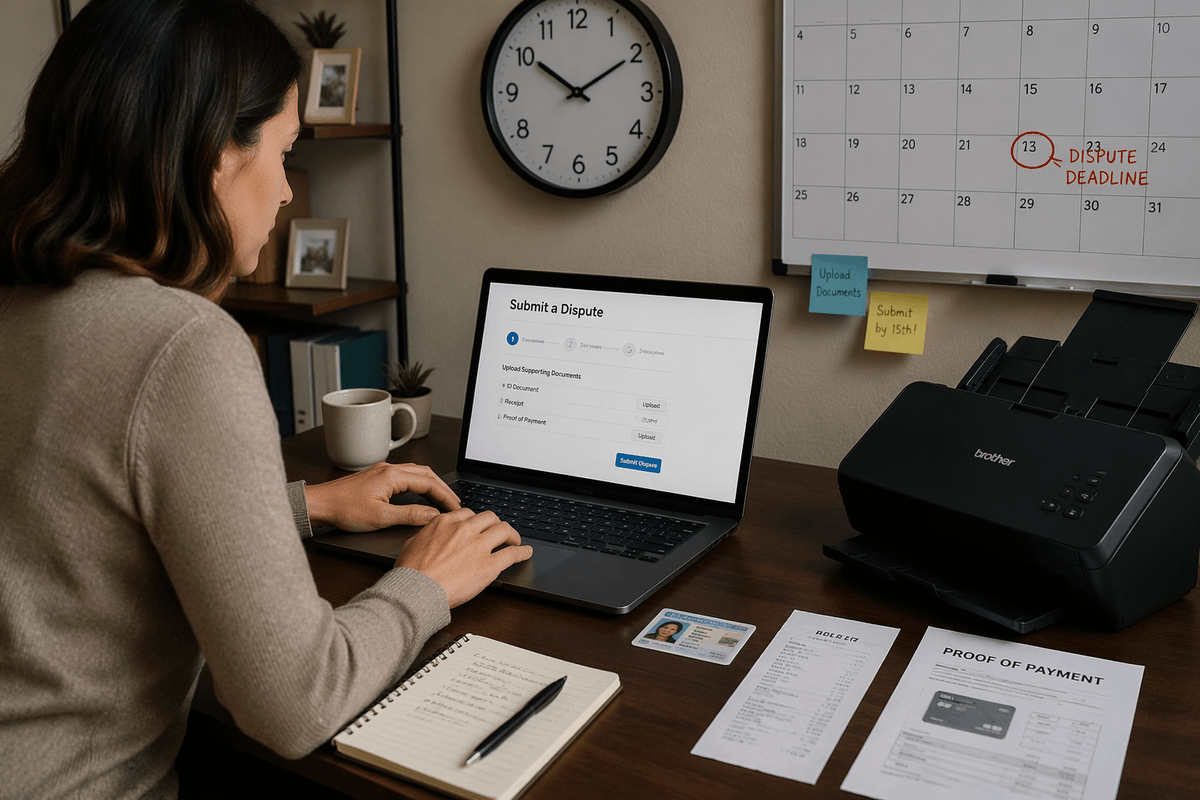
After a few months of “making it work,” the next constraint is that the screening file doesn’t fix itself. The fastest progress usually comes from getting your reports and lining them up with your actual history: ChexSystems for most banks, and Early Warning Services if the denial language hints at it. Once you see the exact entry—amount, bank, date—you can stop guessing and decide whether the path is paying, disputing, or waiting it out.
If there’s an unpaid negative balance, paying it is often the only lever that changes outcomes quickly, even when it feels unfair after bankruptcy. Get a written “paid in full” or “settled” letter and keep it with your account records, because some banks will reconsider with documentation. If the entry is wrong (wrong person, wrong amount, already paid), dispute it with supporting proof and track deadlines; a sloppy dispute tends to drag on.
While you’re clearing items, slow down applications. One clean approval beats three rapid denials, and the timing matters when payroll is already in motion.
Setting guardrails so you don’t get closed again
The first month after approval is when most re-closures happen: deposits are still timing out, autopays are guessing at paydays, and holds can make a “positive” balance look larger than the available balance. The guardrail that matters most is separating money by purpose. Keep one “bills” buffer—maybe even $50–$150—so a single early pull doesn’t shove the account negative and trigger fees or an internal risk review.
Then tighten the mechanics. Turn overdraft coverage off if the bank allows it, or set it to “decline” on debit transactions; the short-term embarrassment is cheaper than a closure mark. Put low-balance alerts at a number that actually hurts (not $5), and pause new autopays until two pay cycles clear without surprises.
Finally, reduce flags you can control: fewer cash deposits if your provider hates them, fewer reversed payments, and no rapid-fire transfers between apps. Stability reads as low risk, and it buys you time to graduate later.