Why Las Fallas feels bigger than a festival
The first time you realize Las Fallas isn’t “a festival you attend” but a city you live inside is usually on an ordinary errand—like grabbing coffee—when you have to detour around a crane lowering a papier-mâché figure the size of a bus into the middle of an intersection. It’s thrilling, but it also means your normal Valencia instincts (walk straight there, hop on a bus, keep it spontaneous) stop working as well once the streets become an active worksite for celebration.
What makes it feel bigger than an event is how many overlapping layers run at once: neighborhood commissions building and guarding their fallas, daily rituals that pull crowds on a schedule, and nighttime energy that refuses to end when you’re ready to. If you stay central, you’re rewarded with constant “something’s happening” momentum, but you pay for it in sleep and slow movement—ten minutes on the map becomes thirty minutes in real life when everyone is funneling toward the same corners.
It also isn’t equally intense everywhere. The center gets the headline density, while outer neighborhoods can feel more navigable without feeling like you’re missing the soul of it. The decision you’re really making isn’t whether to see Las Fallas—it’s whether you want to experience it as a continuous immersion, or as a series of chosen hits with deliberate quiet time built in.
The sensory reality: fireworks, crowds, and all-night noise

The first time a mascletà goes off in the middle of the day, your body reacts before your brain catches up—less “fireworks show,” more controlled concussion. It’s not just loud; it’s physical, a pressure in your chest that makes even confident travelers flinch, then laugh at themselves. Earplugs help, but they don’t make it gentle; they just turn it from overwhelming to usable, especially if you plan to do more than one in a row over a few days.
Crowds aren’t constant, but they’re predictable in a way that can save you. Around the big set-piece moments, the streets stop behaving like streets and start behaving like a slow river: you move when the mass moves, and you can’t “just pop across” to the other side. If you’re staying near the center, that friction becomes your daily tax—quick errands stretch out, meeting friends takes longer than it should, and your phone map will insist you can walk through spaces that are effectively sealed by people.
Firecrackers snap in side streets long after dinner, and bigger fireworks pull everyone outward again just when you’d normally be winding down. A central hotel makes it effortless to catch the late energy, but quiet sleep can be a fantasy; a slightly farther base buys rest, at the cost of timing your returns and occasionally choosing between “one more thing” and a functional next day.
Key moments you’ll actually see (and what they mean)
At some point you’ll look at a schedule and realize you can’t “do everything” without turning your 3–4 days into one long shuffle between barricades. The moments that are easiest to anchor your days around are the daily mascletà in Plaça de l’Ajuntament (the midday shockwave ritual), and one nighttime fireworks set (more visual, slightly less body-rattling). The catch: the mascletà crowd compresses early, and if you arrive late you’ll still hear it perfectly but see almost nothing except raised phones and shoulders—great if you’re conserving energy, frustrating if you wanted the full atmosphere.
The parades and offerings can be the most “human-scale” Las Fallas you’ll get, but they demand patience. The Ofrenda (flower offering) is emotionally legible even if you don’t know the backstory—traditional dress, serious faces, families treating it like a real obligation, not a photo op—yet the pacing is slow and the best viewing spots fill the way a concert rail does. If you’re crowd-wary, it’s often better to watch a shorter stretch from a side street than to fight for the iconic front-and-center view.
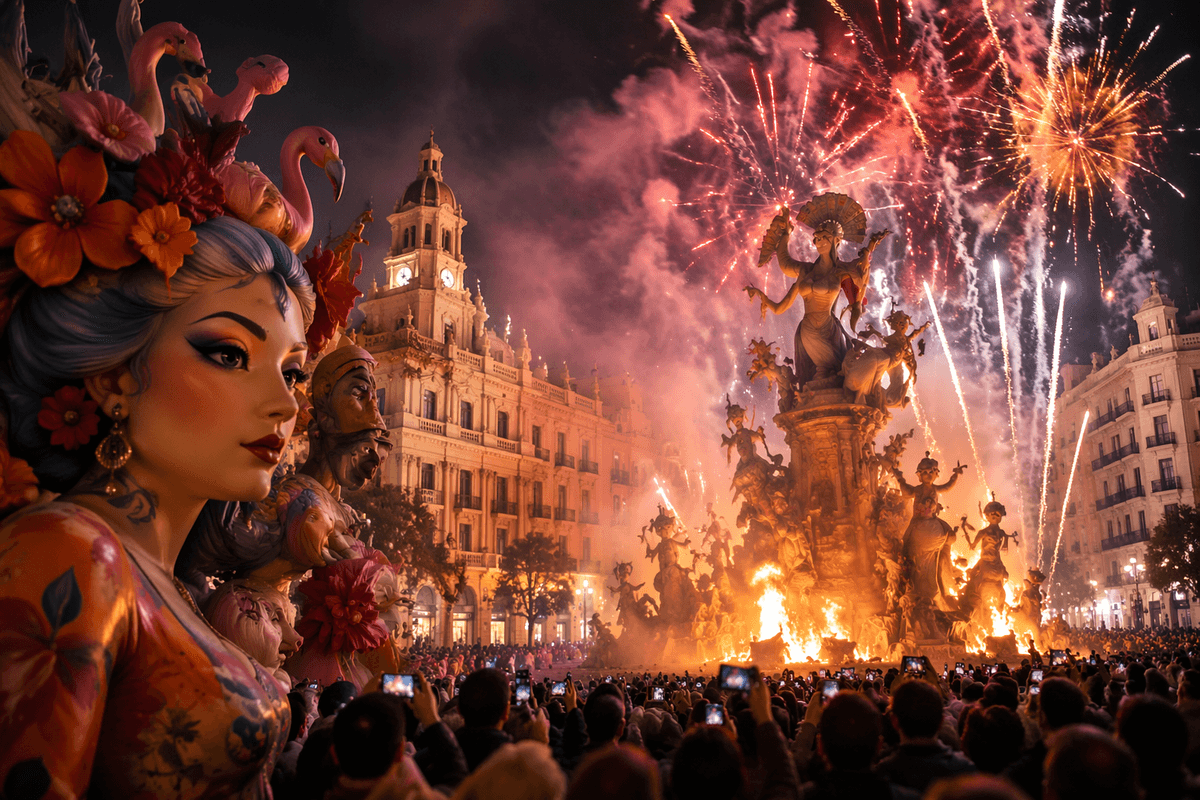
Then there’s la Cremà, the burning, which sounds like a single climax until you’re there and realize it unfolds in layers: smaller neighborhood burnings first, the big ones later, and long gaps where you’re standing around in cold March air wondering if you mis-timed it. If you only pick one, choose a neighborhood falla where you can actually see flames and faces up close—less grand, more real—and accept that the headline burn near the center can be spectacular but feels distant when you’re fifty rows back.
Practical survival: timing, transport, safety, and sleep
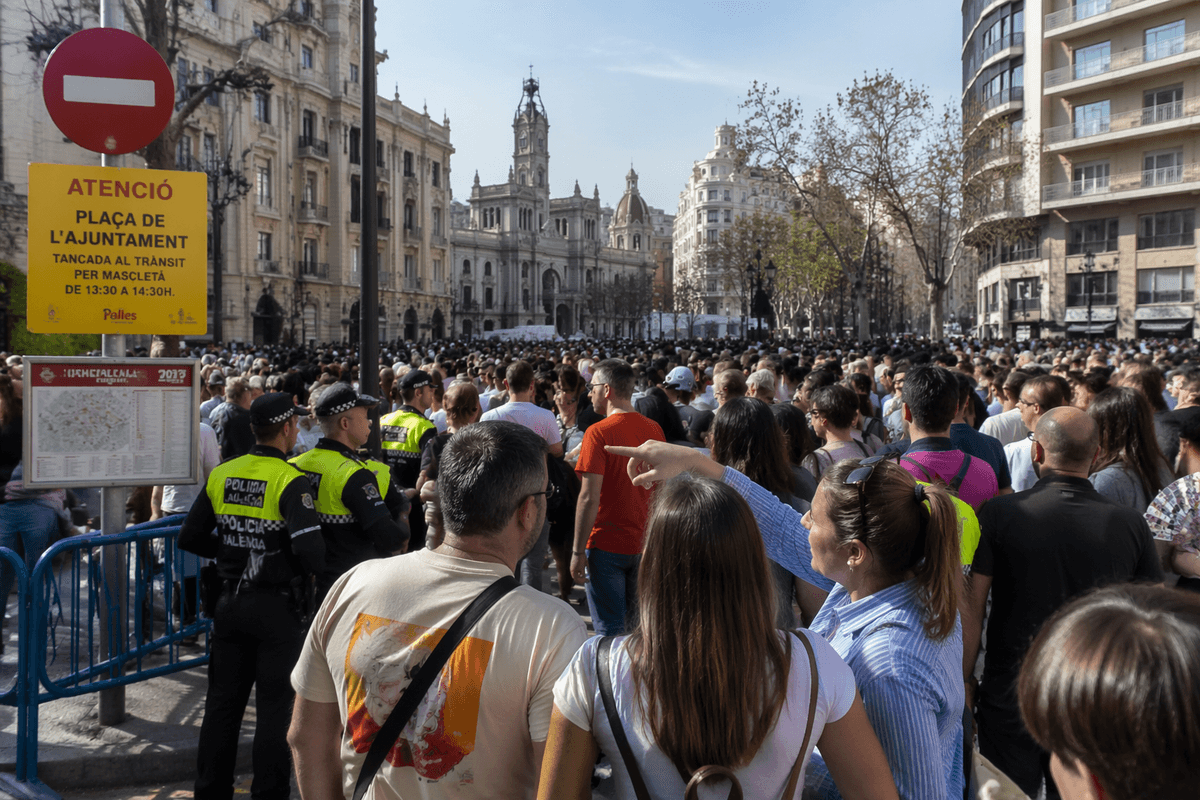
One afternoon I tried to “just” get from Ruzafa to the center for the mascletà with twenty minutes to spare, and it turned into a slow-motion lesson in how Las Fallas changes distance. If you want to be in Plaça de l’Ajuntament with a decent sightline, treat it like a ticketed event even though it’s free: arrive early enough that you’re not being squeezed into whatever gap is left, and pick a meeting point outside the densest blocks because cell service and human traffic both get unreliable at peak minutes.
For getting around, walking is often faster than anything on wheels—but only if you accept detours. Buses can be rerouted, taxis stall, and even short rides can get trapped behind closures; the metro becomes the “cleanest” option when you’re tired, but stations near the center feel like everyone’s same idea at once. If you’re staying outside the core (say, near a metro line), it costs you spontaneity at night, but it can save your next day: the late fireworks energy is fun exactly once when you’re running on four hours of sleep.
Safety-wise, the vibe is celebratory, but the crowd mechanics are real: keep valuables simple, avoid dead-end streets when you hear fireworks building, and don’t assume you can reverse course easily once a lane compresses. For sleep, bring earplugs you actually tolerate, and choose your lodging with honesty—an “I’ll be fine” room on a lively street can quietly decide your itinerary for you after day two.
Is Las Fallas right for you, and how to leave satisfied
On my last morning, I caught myself doing the math: one more late-night fireworks run, or a quiet dinner where I could actually hear the person across the table. That’s the real Las Fallas question—whether you enjoy intensity as immersion, or whether you need it in deliberate doses. If you’re even slightly noise-sensitive, traveling with light sleep, or prone to crowd fatigue, you’ll still have a great trip if you commit to one “big” day (mascletà + a night show) and make the other days about wandering fallas earlier, when streets still feel human.
What helps you leave satisfied is choosing a personal headline in advance, not chasing the city’s. For some people it’s seeing the Plaça de l’Ajuntament mascletà once from inside the crush; for others it’s a neighborhood cremà where you’re close enough to feel the heat and read faces, not just watch smoke over heads. When you hit your chosen peak, let the rest be optional—otherwise the festival’s pace will keep raising the bar until you’re exhausted and slightly annoyed at a city that’s doing exactly what it promised.