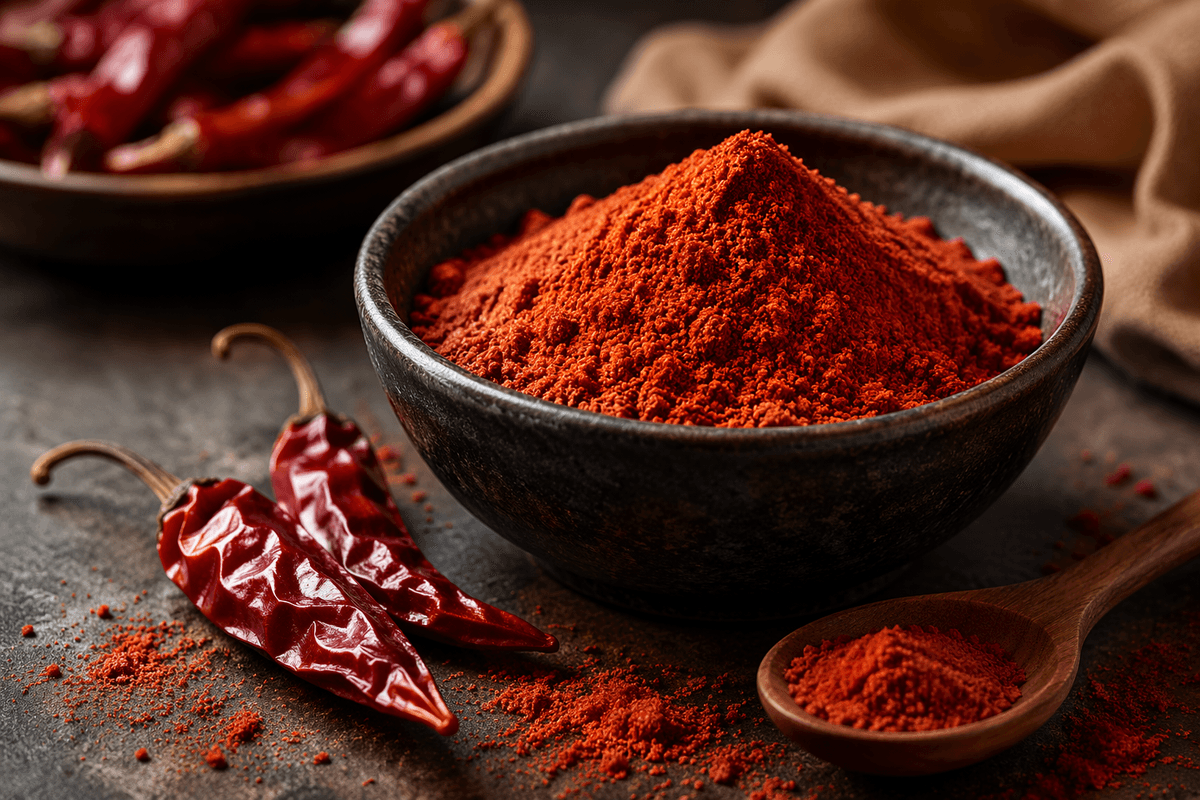
Expecting simple heat, meeting a complex sensation
The first pinch can feel straightforward—warmth, a quick sting, then it fades. But sometimes the heat doesn’t stay in one place. It may spread across the tongue, linger at the back of the throat, or show up later as a small rise of burn behind the breastbone, which can be confusing when you expected “just spicy.”
Part of the surprise is that cayenne isn’t only a flavor. Its “heat” comes from capsaicin, a compound that wakes up nerve endings that normally react to temperature and irritation. Those nerves don’t always respond the same way every day, and your brain can interpret the signal differently depending on how hungry you are, how fast you’re eating, or whether you’re already a little sensitive.
That’s why two meals can use “the same amount” and still feel inconsistent—especially when the cayenne is fresher, more finely ground, or you poured instead of measured.
Scoville numbers versus real-world burn in meals
One night the jar barely registers, and the next it feels like it’s climbing your throat—even though you’re sure you shook in the same “couple taps.” That mismatch is where Scoville numbers can feel less helpful in a home kitchen than they sound on paper.
Scoville ratings describe the potential heat of a pepper product, but your mouth experiences dose: how much capsaicin actually ends up in the bite you swallow. A slightly heaped 1/4 teaspoon, a fresh bottle that pours faster, or a blend that’s more concentrated can quietly raise that dose. It can also land differently depending on the meal. Fat and dairy tend to dissolve and carry capsaicin in a way that spreads it across more of your mouth, while a hot, acidic, or very salty dish can make already-stimulated nerve endings feel sharper. Over time, repeated exposure may nudge tolerance up, but it’s rarely a straight line—so “same Scoville” doesn’t always mean “same burn.”
What drives the burn beneath the surface

Sometimes the sharpest moment isn’t the first taste, but the second swallow—when your tongue feels “hot” even though the food has cooled. That disconnect can make it seem like you suddenly became less tolerant, when what’s changing is how strongly your sensory nerves are being triggered.
Capsaicin doesn’t burn tissue the way heat does. It binds to receptors on pain-and-temperature nerves (often described as TRPV1), the same system that reacts to scalding liquids. Once those receptors fire, your body can respond as if it needs cooling: more saliva, watery eyes, flushing, and a faster pulse. In some meals, capsaicin also hangs around longer because it’s carried in oil or melted fat, coating the mouth and keeping those receptors activated with every new bite.
Lower down, that same irritation-signal can show up as a vague chest warmth or stomach discomfort, but it isn’t always consistent. If you’re eating quickly, already mildly sensitive, or pairing cayenne with acid, or very hot soup, the signal can feel amplified in a way that’s hard to predict.
Why cayenne can shift appetite and satisfaction
Halfway through a spicy meal, it can feel like your hunger “switches off” even as the food still smells good. Or the opposite happens: you keep taking bites because the heat is stimulating, but then you notice you’re full sooner than expected. That push-pull can be hard to read, especially when the amount of cayenne wasn’t very large.
Capsaicin can change the way your brain weighs comfort and reward in the moment. When those heat-sensing nerves keep firing, your attention shifts toward managing the sensation—more sipping, slower chewing, smaller bites—so the meal’s pacing changes without you meaning to. At the same time, the body’s “cooling” responses (saliva, runny nose, a little flushing) can mimic the feeling of being satisfied or finished, even if your stomach hasn’t caught up yet.
In a rich dish, cayenne may feel pleasantly rounded and make a small portion feel complete, while in a lean, acidic, or very hot soup, the same dose may feel harsh enough that you stop early simply to escape the burn.
Nutrition: tiny servings, real bioactive effects
It’s easy to assume that if a spice feels powerful, it must be “doing a lot” nutritionally. Then you look at the amount you actually used—a pinch, a dusting on eggs, a quick shake into soup—and it’s surprisingly small.
In those tiny servings, cayenne’s vitamins and minerals tend to be modest, even if the label lists things like vitamin A–related carotenoids. The mismatch happens because the strongest effect you notice isn’t from calories or fiber—it’s from capsaicin, a bioactive compound that can trigger nerve receptors at very low doses. That means a 1/8 teaspoon can feel intense while contributing little to your overall nutrient totals.
This is also where people can misread “healthiness” as “tolerance.” If your mouth or upper chest feels irritated after a spicy meal, it may say more about capsaicin exposure and meal context than about whether the spice is inherently “good” or “bad.”
Portion awareness when heat outpaces your tolerance
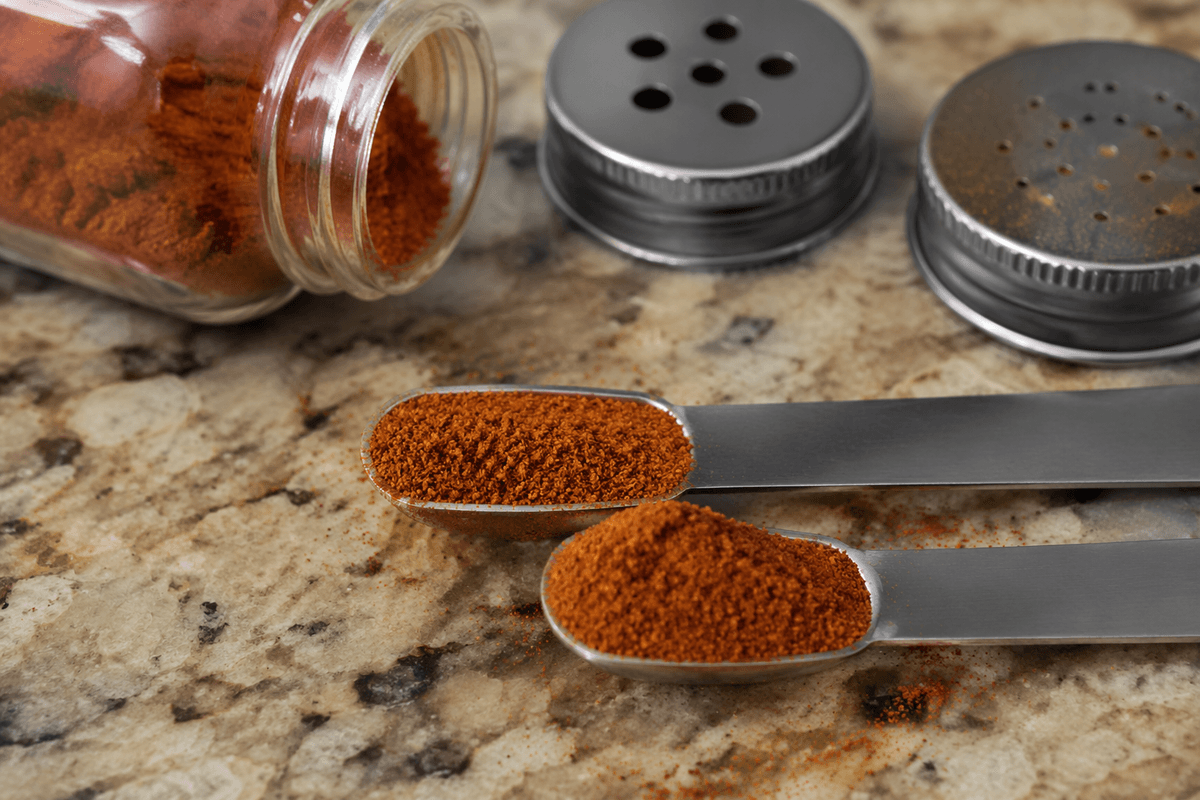
The moment it sneaks up is often mid-bowl: you’re eating normally, then a few bites in, your tongue feels “lit up,” and you realize the spice level has quietly moved past enjoyable. That tends to happen when the amount isn’t actually stable—because “a pinch” can double depending on grind size, how wide the shaker holes are, or whether the powder has clumped and then suddenly breaks loose.
What your mouth experiences is capsaicin dose per bite, not the label’s promise. A leveled 1/8 teaspoon and a slightly rounded 1/8 teaspoon can be meaningfully different, especially if the cayenne is fresh and more potent. And when it’s stirred into a dish with oil, the capsaicin can spread and coat the mouth more evenly, keeping those heat receptors firing longer. That can make it feel as if your tolerance dropped overnight, when it may be that the portion shifted in a way that’s hard to notice until the burn is already there.
A heat that feels manageable while you’re chewing can turn into throat warmth after you swallow, and that lag can make it harder to connect “how much” to “how it felt,” especially if you added more between tastes.
When a sensible increase causes unexpected discomfort
It can happen on an otherwise normal night: you nudge your usual amount up a little, and instead of “more flavor,” you get a mouth burn that won’t settle, or a warm, scratchy feeling after you swallow. Because the increase felt sensible, it’s easy to misinterpret the discomfort as sudden “new sensitivity,” even when the main change was dose.
A small step—from a leveled 1/8 teaspoon to a rounded 1/8, or up to 1/4—can push capsaicin past the point where TRPV1 nerves start firing more persistently. If the meal is very hot, acidic, or taken quickly, those signals can feel sharper; if you’re prone to reflux, that same irritation can read as upper-chest burn later on.
When the timing feels delayed or inconsistent, it can help to treat it as a pattern worth noticing rather than a one-off failure of tolerance—and if the discomfort keeps repeating or escalates, it’s a good moment to pause and reassess what your body is telling you.